


How To Store Cast Iron Properly (And What Most People Do Wrong)
Most cast iron problems don't start during cooking.
They start during storage.
Improper storage can introduce moisture, which is the biggest long-term risk to cast iron.
Why Storage Matters More Than People Think
Cast iron is extremely durable during cooking.
Most damage happens when moisture sits on exposed iron between uses.
Good storage habits usually prevent rust before it starts.
If you'd like to understand how rust develops, see our guide on how to fix rust on cast iron.
The Three Rules of Good Storage
Proper storage usually comes down to three simple rules:
- Store completely dry
- Apply light protection oil
- Avoid trapped moisture
These three habits prevent most long-term problems.
Why Drying Matters Before Storage
Even small amounts of moisture can start rust.
This is why many owners dry with a towel and then heat briefly before storing.
If you'd like a full routine, see our guide on how to maintain cast iron quickly.
Should You Oil Before Storage?
A very thin oil layer helps protect the surface.
This layer acts as a moisture barrier.
The key is keeping the layer very thin.
Too much oil can cause buildup rather than protection.
Where To Store Cast Iron
Good storage locations usually:
- Stay dry
- Have airflow
- Avoid humidity
- Avoid sealed moisture
Most kitchen cabinets work well if the pan is fully dry.
Should You Stack Cast Iron?
Stacking is usually fine if moisture is not trapped.
Some people place a paper towel between pans to allow airflow and prevent trapped humidity.
Common Storage Mistakes
Most storage issues come from:
- Putting pans away damp
- Sealing moisture inside lids
- Skipping protective oil
- Storing in humid areas
Most rust problems can be traced back to one of these.
Making Maintenance Easy Between Uses
Storage works best when maintenance is simple.
If applying oil feels inconvenient, it often gets skipped.
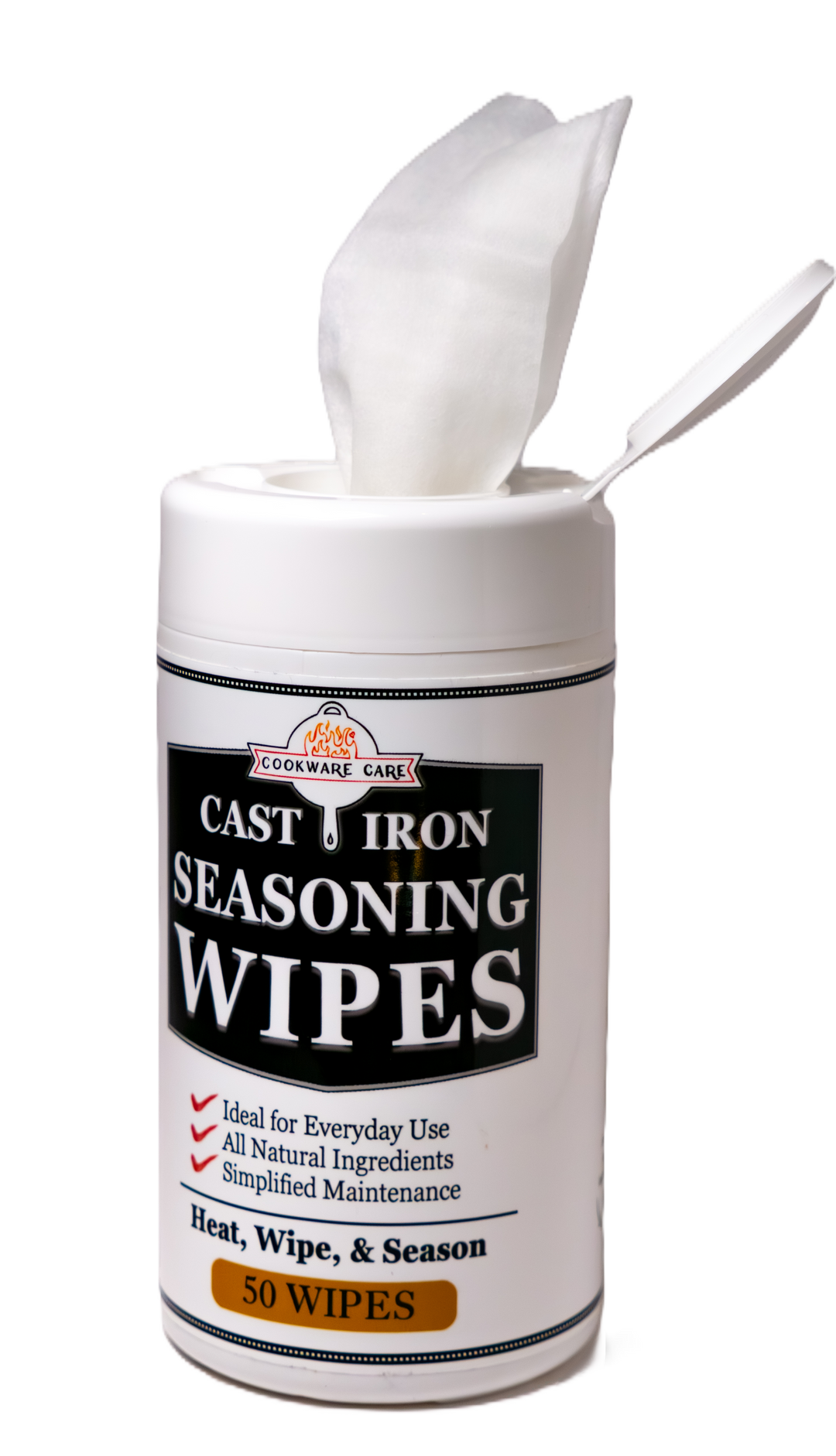
This is one reason we developed Cookware Care Seasoning Wipes — to make applying thin protective oil layers quick after cleaning.
The goal isn't adding work.
The goal is making good habits easier to maintain.
Frequently Asked Questions
Should cast iron be stored with a lid?
It can be, but allowing airflow helps prevent trapped moisture.
Can I store cast iron in the oven?
Yes, as long as moisture is not present.
Do I need to oil after every use?
Regular maintenance usually helps long-term protection.
Is storage really that important?
Yes. Most rust problems begin during storage, not cooking.
Related Cast Iron Guides
- How to Fix Rust
- How to Maintain Cast Iron Quickly
- Common Cast Iron Mistakes
- How Often You Should Season
About Cookware Care
Cookware Care focuses on simplifying cast iron maintenance through practical routines based on real-world use, product development experience, and daily cookware care.

Leave a comment