


Why Some Oils Season Cast Iron Better Than Others
One of the most common questions people ask about cast iron is what oil they should use.
The truth is many oils can work, but some clearly perform better than others.
What matters is understanding why some oils build stronger seasoning over time and how their chemistry affects the result.
Quick Answer: Oils higher in polyunsaturated fats tend to polymerize more effectively and build stronger seasoning layers. Choosing the right oil helps create better long-term seasoning, but proper application and heating are still necessary to get good results.
What Seasoning Actually Is
Seasoning isn't just oil sitting on your pan.
Seasoning is oil that has chemically changed through heat.
When heated properly, certain oils polymerize. This means they transform from a liquid into a bonded protective layer on the iron.
This layer helps:
- Prevent rust
- Improve food release
- Protect the metal
- Improve cooking performance
Why Some Oils Perform Better
Oils behave differently because of their fat composition.
Oils higher in polyunsaturated fats tend to polymerize more readily. This is one reason grapeseed oil is commonly used for seasoning.
This is why oil choice does matter when building seasoning. Oils with the right fatty acid structure tend to form stronger and more stable layers over time.
Even with the right oil though, proper technique is still required to get the best results.
Thin Layers Matter More Than Excess Oil
One of the biggest misconceptions is that more oil builds better seasoning.
In reality, seasoning builds best through very thin applications.
Thin layers allow:
- Even heating
- Better bonding
- Stronger seasoning layers
- Less stickiness
Too much oil can cause uneven buildup, sticky spots, or weak seasoning.
A good rule is to apply oil, then wipe off what looks like excess.
Why Heating Matters
Even the best oil will not season properly without heat.
Heat allows oil to:
- Spread into the iron texture
- Polymerize
- Bond to the surface
This is why routine maintenance often includes briefly heating the pan after applying oil.
Do You Need a Special Oil?
You don't necessarily need something complicated, but choosing an oil that polymerizes well can make seasoning easier to maintain.
Consistency also matters. Using the same oil and a simple routine often produces better long-term results than constantly switching products.
Making Consistency Easier
The hardest part of cast iron care usually isn't knowing what to do.
It's staying consistent with the routine.
Anything that makes applying oil simple and repeatable tends to produce better long-term results.
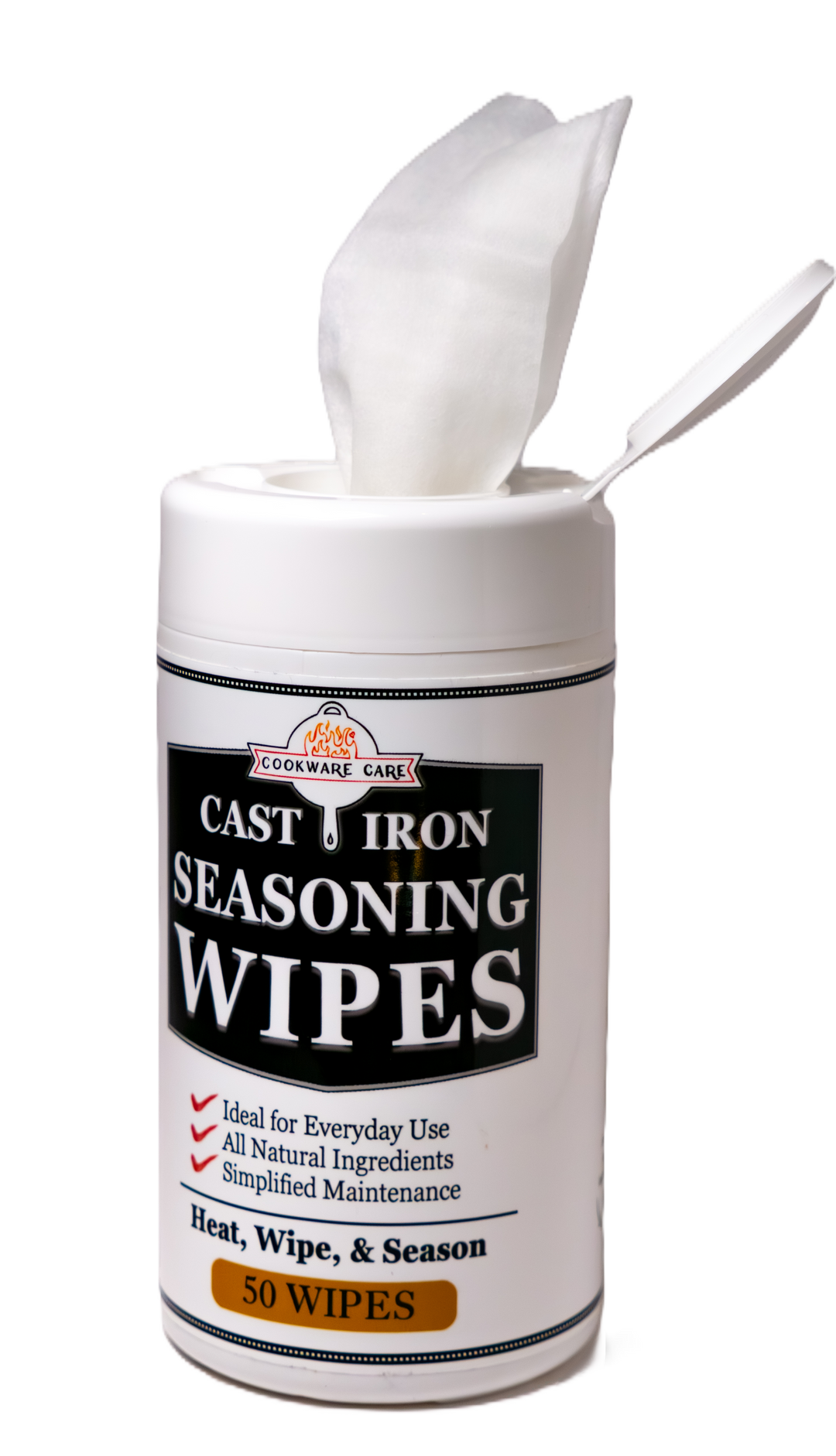
This is one of the reasons we developed Cookware Care Seasoning Wipes — to make applying thin, consistent oil layers quick after cooking.
The goal isn't adding complexity. It's making the maintenance step easier to actually stick with.
Common Mistakes When Choosing Oils
Most problems don't come from the oil itself.
They usually come from:
- Using too much oil
- Not heating after applying oil
- Inconsistent routine
- Expecting instant results
Seasoning builds gradually through repeated thin layers.
Frequently Asked Questions
Is grapeseed oil good for cast iron?
Yes. Grapeseed oil polymerizes well and spreads easily in thin layers.
Is one oil dramatically better than others?
Some oils do polymerize better and can build stronger seasoning layers, but routine and proper application still determine the final results.
Can I use the oil I already cook with?
Often yes. Proper application and heating matter just as much as the specific oil.
How long does seasoning take to build?
Seasoning develops gradually through repeated cooking and maintenance. Consistency over time produces the best results.
Leave a comment